PETLIBRO Brand Spotlight: Smart Feeding Meets Modern Design
By Dr. Jessica Martinez, Veterinary Technician
In my years working in veterinary clinics, I’ve seen the evolution of pet care technology shift from simple gravity feeders to sophisticated, app-controlled ecosystems. While functionality is always my primary concern—specifically portion control and sanitation—pet owners often face a choice between equipment that works well and equipment that looks good in their homes.
The Ecosystem: App & Freshness
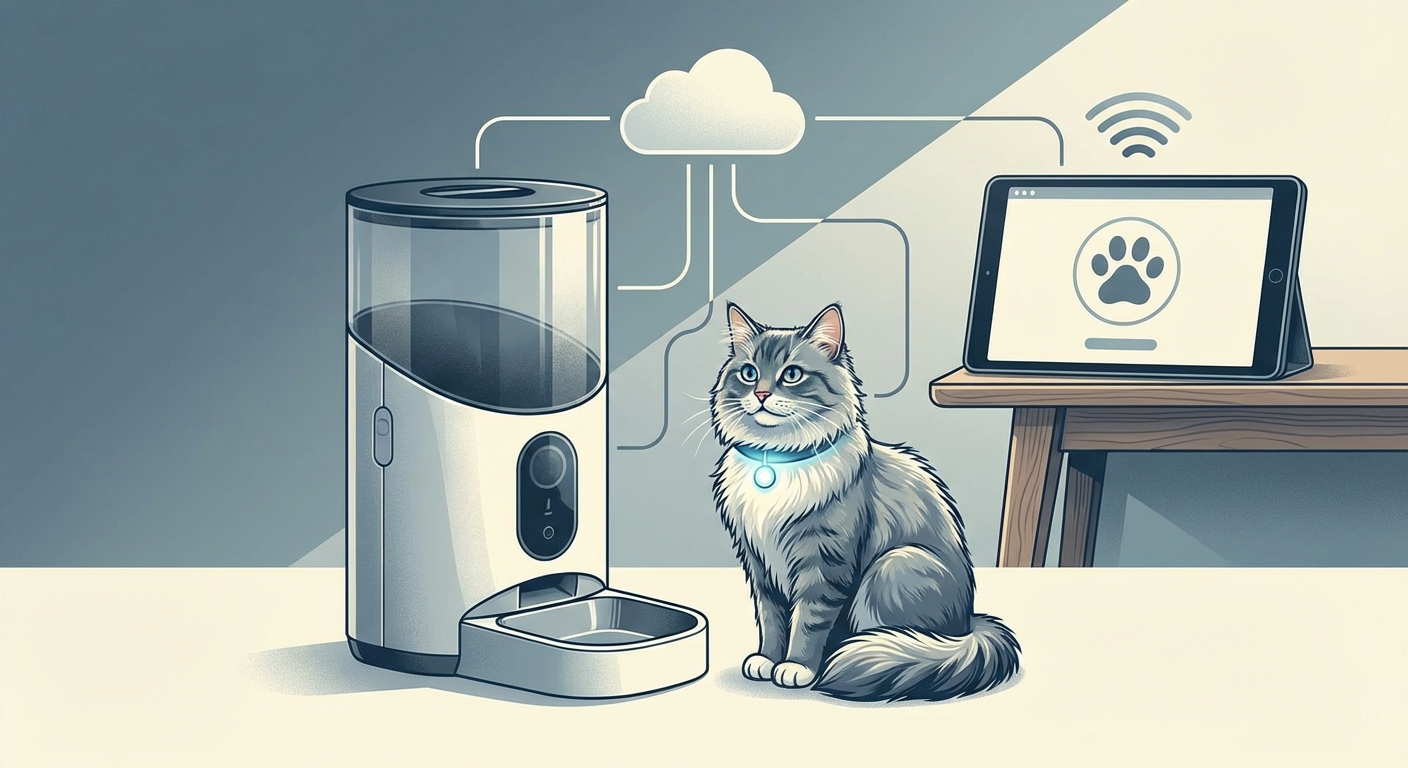
A smart feeder is only as good as its software reliability. PETLIBRO utilizes a centralized app ecosystem (PETLIBRO Lite and the main PETLIBRO app) to manage feeding schedules. This allows for remote adjustment of portion sizes and feeding times, which is critical for cats on weight management plans. The interface is intuitive, providing logs that help you track if your cat is eating their full meals.
Beyond the electronics, the physical design prioritizes food integrity. Kibble spoilage is a common issue with large-capacity hoppers. PETLIBRO addresses this with a triple-sealing system in their Granary line, including a sealed top lid, a sealed rotor, and a dedicated slot for desiccant bags. This reduces the oxidation of fats in the kibble, maintaining palatability and nutritional value over time.
The Flagship: Granary Camera Feeder Review
The
The integrated camera offers 1080P resolution with a 145° wide-angle view, which is sufficient to see both the bowl and the immediate surrounding area. The inclusion of infrared night vision is essential, as many cats are crepuscular eaters (active at dawn and dusk). The two-way audio feature allows you to listen for the sound of kibble hitting the bowl—a reassuring mechanical check—or to speak to your pet, though I generally advise against startling anxious cats via speakers.
From a digestive health standpoint, one of the most valuable options for this unit is the \"Slow Feed\" stainless steel bowl attachment. Unlike standard open bowls, the slow feeder has ridges that force the cat to eat around obstacles. This significantly reduces the speed of ingestion, which can mitigate post-prandial vomiting (regurgitation immediately after eating).
The unit holds 5 liters of food, which is substantial for a single-cat household. The hopper is translucent enough to visually inspect food levels, but opaque enough to protect the food from sunlight degradation.
The Reliable Staple: Granary WiFi Review
If visual monitoring isn't a priority, the
This model focuses heavily on mechanical reliability. It uses a patent-pending rotor design aimed at preventing jams—a critical failure point in cheaper feeders. The portion accuracy is calibrated to roughly 1/12 of a cup per portion setting. This granularity allows for precise caloric control, which is vital for managing feline obesity.
Battery backup is another key feature. The unit can accept D-cell batteries as a fail-safe. In the event of a power outage, the feeder will continue to dispense according to the saved schedule, ensuring your pet does not miss a meal even if the WiFi is down.
Feature Comparison
When deciding between the flagship and the standard model, the primary difference lies in the monitoring capabilities. Both share the same fundamental feeding engine.
| Feature | ||
|---|---|---|
| Camera | 1080P Wide Angle + Night Vision | None |
| Connectivity | 2.4GHz / 5GHz WiFi | 2.4GHz / 5GHz WiFi |
| Capacity | 5 Liters | 5 Liters |
| Bowl Type | Stainless Steel (Slow feed optional) | Stainless Steel |
Innovation & Accessories
PETLIBRO has recently expanded beyond standard gravity-assist dispensing. For multi-cat households, food aggression or theft is a common behavioral issue. The
Additionally, they have introduced the
Regarding maintenance, stainless steel bowls are standard across most of their high-end range, which I highly recommend over plastic to prevent chin acne (feline acne).
Verdict
Who is PETLIBRO for? They are best suited for design-conscious pet owners who are comfortable with app-based management and want consistent portion control. While they sit at a higher price point than basic dispensers, the reliability of the rotor mechanism and the gasket sealing justifies the investment for long-term use.
Frequently Asked Questions
How often do I change the desiccant bag? expand_more
It is recommended to change the desiccant bag every two weeks to ensure the food remains crisp and free from moisture, which can lead to bacterial growth.
Can I use rechargeable batteries for the backup? expand_more
While some rechargeable batteries may work, standard alkaline D-cell batteries are generally recommended for the backup power source to ensure consistent voltage and longer standby life during outages.
Does the feeder work without WiFi? expand_more
Yes. Once the schedule is set via the app while connected to WiFi, the feeder stores the schedule locally. If the internet goes down, it will still dispense food, provided it has power.